VERNISSAGE : 10 September, 18h - 21h

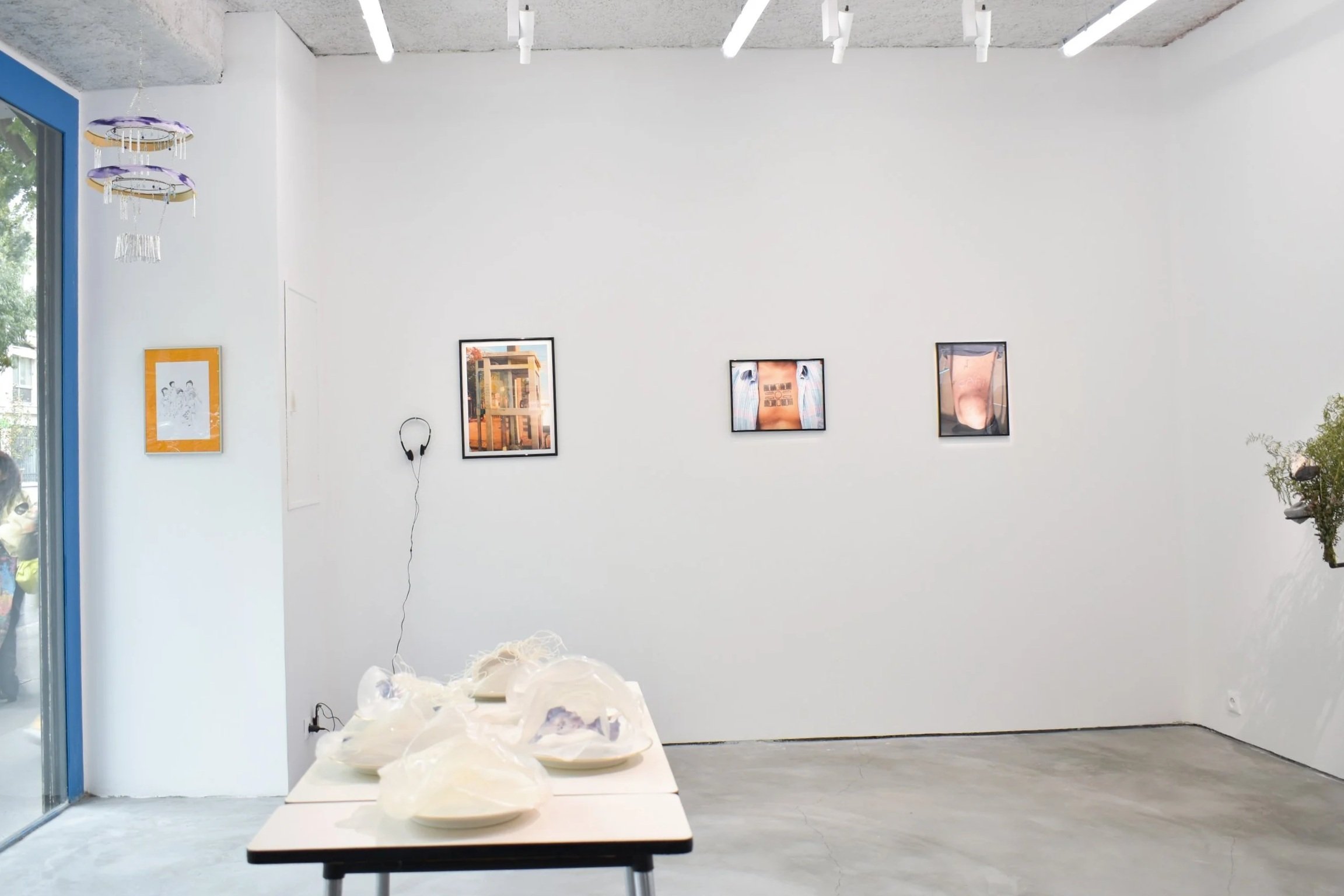
Đoàn Tụ, exhibition view, featuring works by Thiên-Ngoc Ngô-Rioufol and Lê Hoàng Nguyên, Galerie Bao, Paris, 2026. Photo: Caleb Stocco.
Artists: Kim Đoàn Quốc, Alix Douart Sinnouretty, Louise Lan, Thiên Ngoc Ngô-Rioufol, Flora Nguyên, Lê Hoàng Nguyên, Matthias Pasquet, Régis Sénèque, Nicole Tran Ba Vang and Kianuë Tran Kiêu.
Curators: Eléonore Hải-Vân Trần et Camille Minh-Lan Gouin for Lune rougissante.
Vietnamese Memories, the third chapter of the exhibition project Đoàn tụ, initiated by the collective Lune rougissante, brings into dialogue memories, investigations, and imaginaries developed around Vietnam by different generations of artists from the Vietnamese diaspora in France. A scattered community, formed by the waves of exile that followed the Indochina War (1946-1954) and the subsequent American war in Vietnam (1955-1975). From CAFI[1] repatriates and FOEFI Eurasians[2] to boat people refugees and so-called economic migrants: all had their names, acronyms, and statuses defined. Upon their arrival in France, they were sometimes confined to abandoned and remote locations, and at other times dispersed throughout the country. In the late 1970s, in order to prevent the formation of diaspora enclaves, the exceptionally rapid naturalization of Vietnamese people was granted on the condition that they accept isolation. Only immediate family members were allowed to be reunited. Despite these policies of invisibilisation, memories of Vietnam took root on French soil, emerging in the form of pagodas, restaurants, and shopping centers. In these places of memory, new generations have taken shape. Born into this in-between space, they come to terms with silence and contradiction, and timidly pray to ancestors whose language they do not speak-or speak only a little-before altars filled with images that are as familiar as they are unknown. Challenging notions of origin and return, the artists featured in this exhibition navigate between Vietnam and its diasporas, probing the waters, digging into the earth and their own skin, in search of what this Vietnameseness they have inherited might be. The works they create from the elements they gather build bridges from one shore to the other, suture the fragmented parts of their being, fill the gaps in the torn fabric of collective narratives, and trace new genealogies-fictional or spectral, chosen or dreamed.
Đoàn tụ thus comes to be understood as a way of finding one another again among unfamiliar kin, connected by the same point of departure, the same origin. The multiplicity of forms and media employed by the artists constitutes as many currents feeding one and the same river. It is an act of sharing, a narrative composed in turn of each person’s perspective of Vietnam, that of their ancestors, and the one that constitutes them. Like a myriad of rays refracted through water, the works brought together form the portrait of a constantly shifting Vietnam.
Đoàn tụ is a collective movement, an exhibition that continuously forms and dissolves, carried by the currents followed by its artists and curators. After receding from Bordeaux, the wave flowed through the port of Marseille, carrying to the PAC Vietnamese stories intertwined with the colonial past of the city. In Paris, Galerie Bao welcomes a fragment of our memories, troubled waters sounded by the artists, from which stories of war and exile, misunderstood or forgotten, rise to the surface.
[1] Reception Centre for French returnees from Indochina
[2] Federation of organisations for French children of Indochina
SELECTED VIEWS


RELATED PUBLIC PROGRAM(S)