
Featuring
Fair
Summary Block
News
Featured
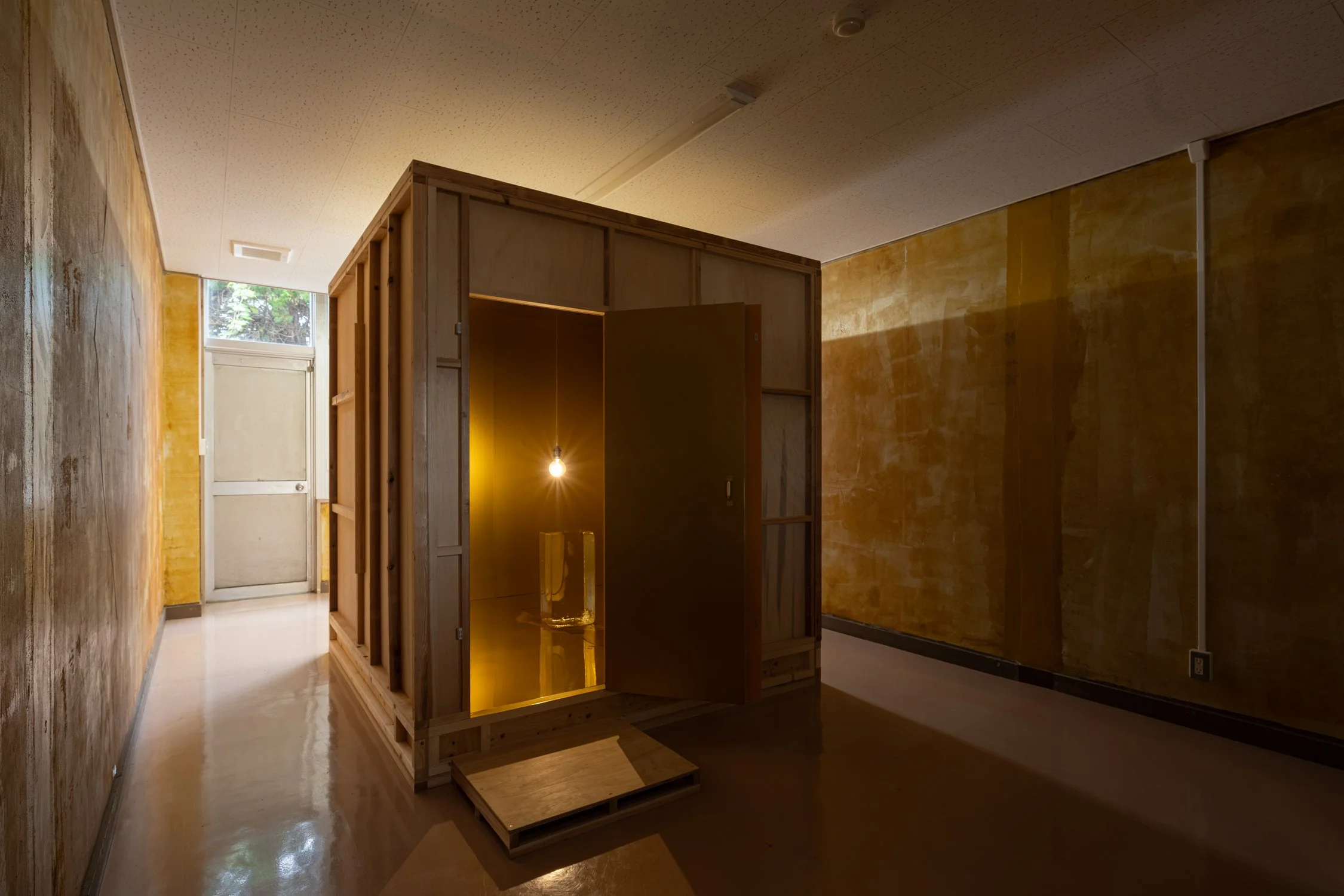
À la fin de sa residence à Fukuoka Asian Art Museum, Hằng Hằng présente À pieds nus – une conversation avec la glace. Elle invite les visiteurs à pénétrer dans un espace intime où la glace, le laiton et la lumière se transforment. Le corps devient partie prenante de l’installation, influençant la matière par sa simple présence. Inspirée par les traditions japonaises et vietnamiennes, l’œuvre interroge la naissance du sacré.
“RE:FORM - A glimpse of abstraction in Vietnam since Đổi Mới” at galerie frank elbaz in Paris
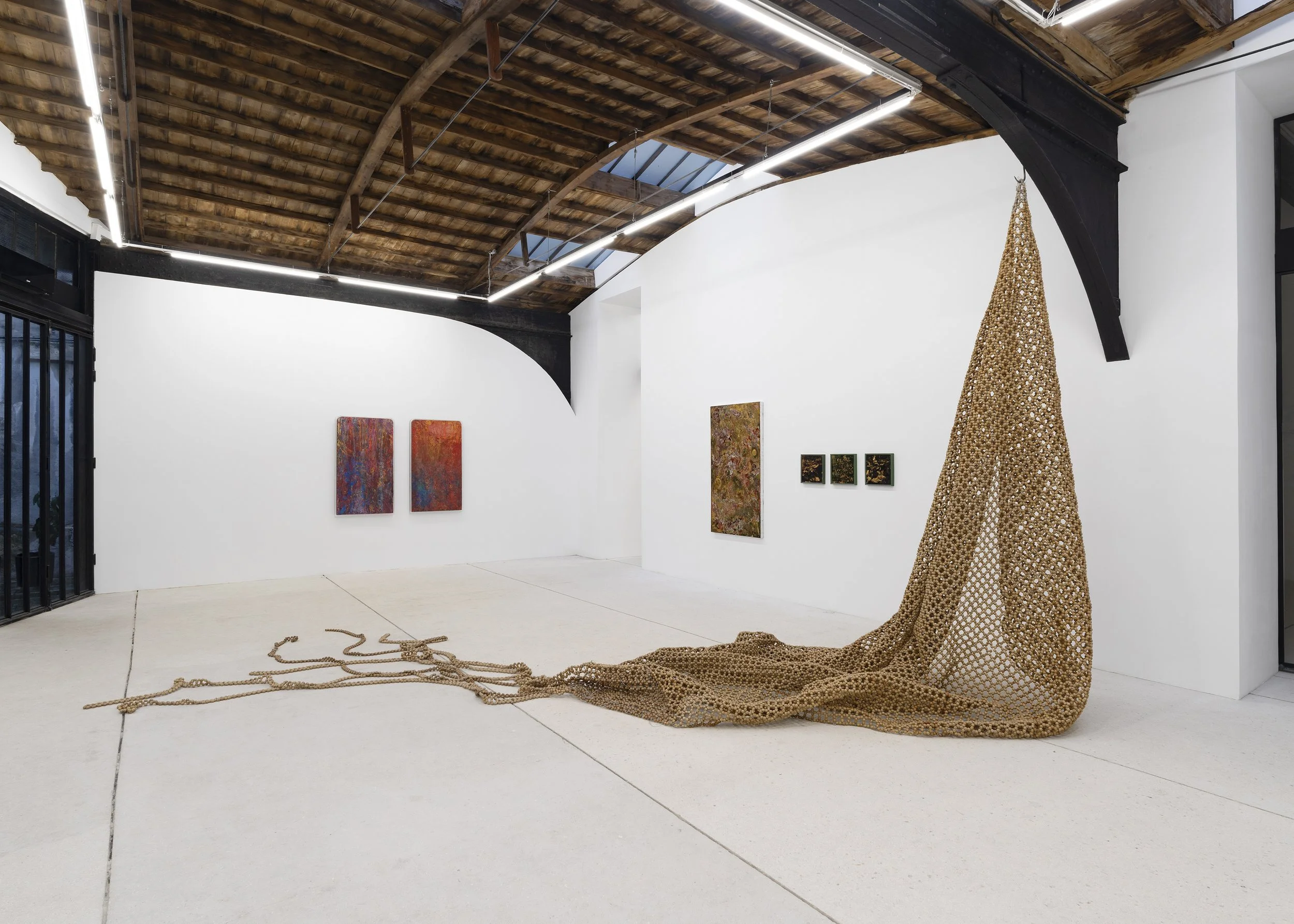
“Abstraction in the West is different from that in Asia,” curator Lê Thiên-Bảo told me when I remarked that much of the art in “RE:FORM – A glimpse of abstraction in Vietnam since Đổi Mới”, would be counted, according to most definitions, at least in the West, as figurative. “It is much closer to extraction. . . . Painting without form did not exist before Đổi Mới”—the period after 1986 when the country opened to the West through a Socialist-oriented market economy. “Before then, Vietnam was under Russian influence; you were only allowed to make propaganda pictures.” The exhibition traces the practices of five Vietnamese painters and sculptors who since that time have turned to abstraction, which here seems to mean an exploratory, stylistic freedom that could include representation. In the work of several of the artists here, formal experimentation coexists with reflection, through the choice of materials, on the history of their postcolonial, postwar, post-Soviet, neo-consumerist society.
By Joe Fyfe
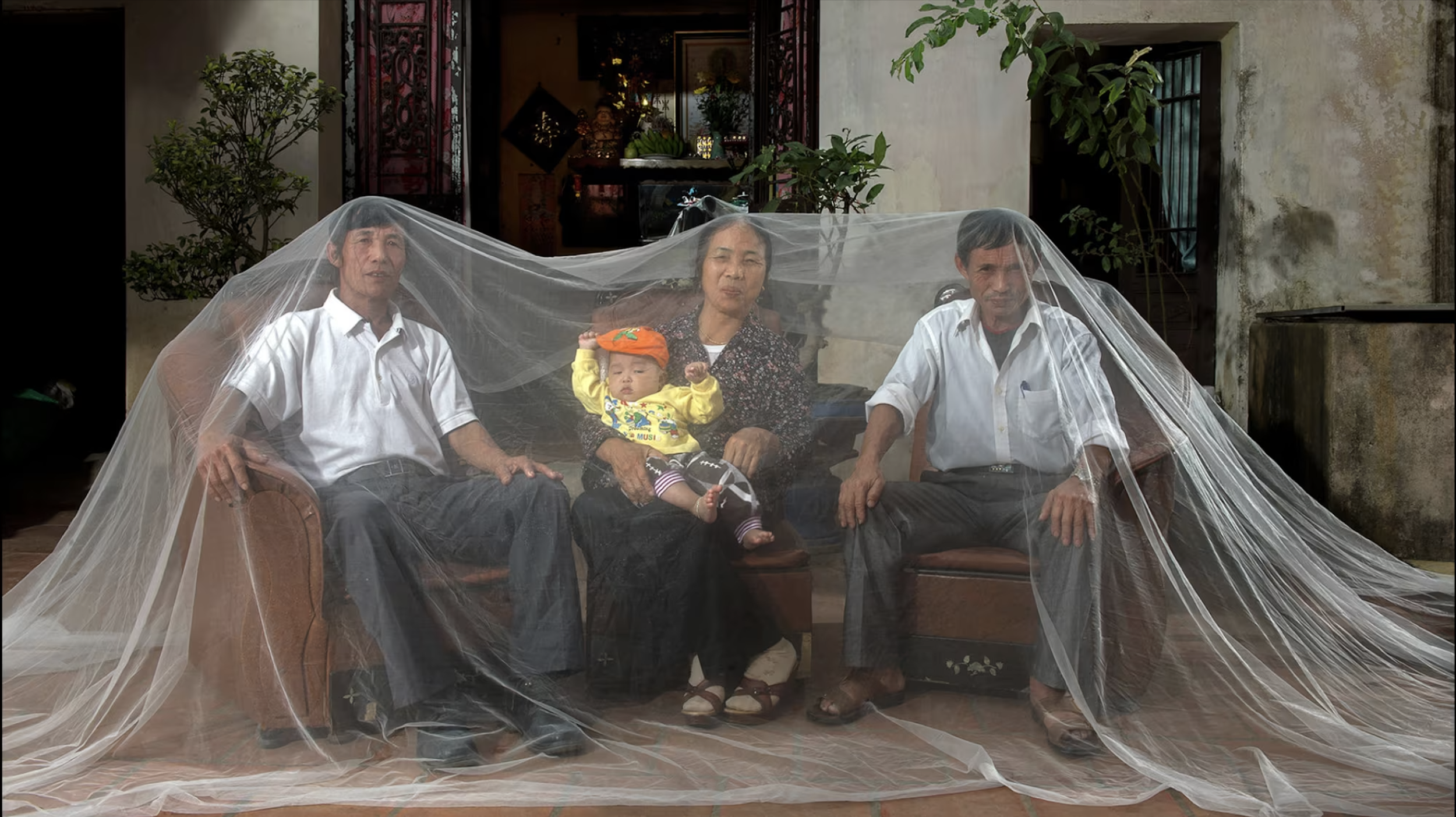
Beneath a diaphanous white veil, four family members sit together on tan leather chairs, the woman in the center holding a baby in her arms. They gaze pointedly at the viewer, their concealed-yet-visible state a potent metaphor. Now in their 60s, they are the children born from a Japanese soldier and Vietnamese wife in the years that Japan occupied Vietnam during World War II. Like others born from these taboo unions, they have dealt with social hardships and the lifelong absence of their father. Though some troops stayed after the war, many families faced forced separation by the mid-1950s, when soldiers were required to return.
By Jacqui Palumbo (CNN)
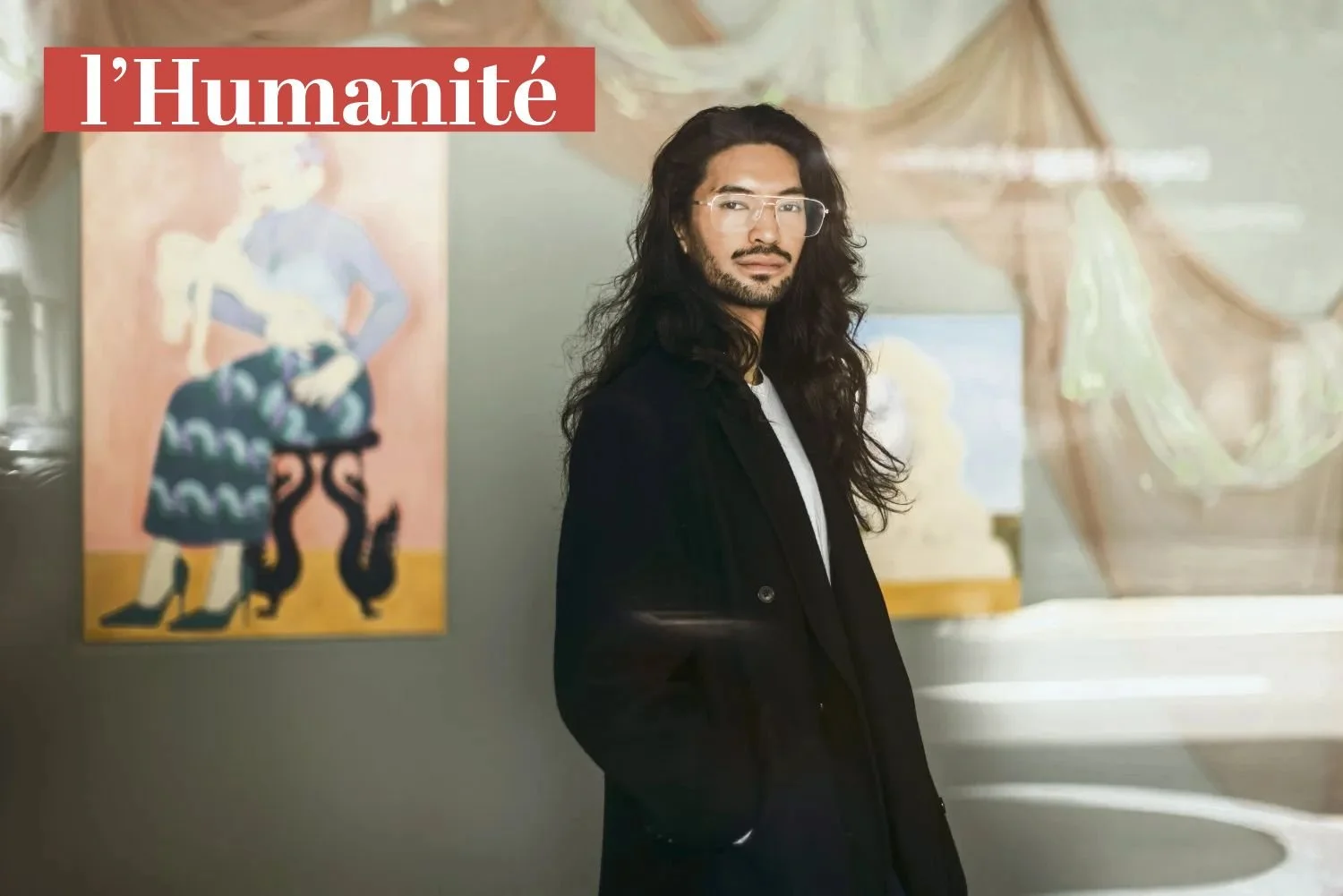
Richie Nath, peintre queer birman en exil et en quête de devenir.
L’artiste, en exil à Paris depuis le coup d’État de la junte militaire en 2021, expose ses œuvres jusqu’au 17 juin à la galerie Bao, dans le 11e arrondissement. Ses œuvres éclatantes constituent à la fois un acte de résistance contre l’armée et contre la répression de la communauté LGBTQ + dans son pays d’origine.
De sa première vie à Rangoun, il se remémore surtout les contes que lui racontait sa mère avant de s’endormir, des récits folkloriques dans lesquels les princesses se transformaient en ogres. L’exil a balayé tout le reste. « En fuyant mon pays six mois après le coup d’État de 2021, j’ai dû abandonner bien plus qu’un foyer. J’ai également dû renoncer à mes aspirations et à mes désirs, à la façon dont je me voyais progresser. Alors, quand je suis arrivé à Paris, je suis reparti de zéro. » Un arrachement, puis une seconde naissance.
Par l’Humanité
In her first solo exhibition in Paris, Thủy Tiên Nguyễn reimagines Paris By Night, the legendary entertainment show created for Vietnamese audiences across the diaspora. Through kinetic glass sculptures, the artist approaches this cultural phenomenon as a space where memory, spectacle and collective imagination converge. Moving between personal inheritance and shared mythology, the exhibition considers how images of Vietnam circulate beyond its geographical borders.