
All news
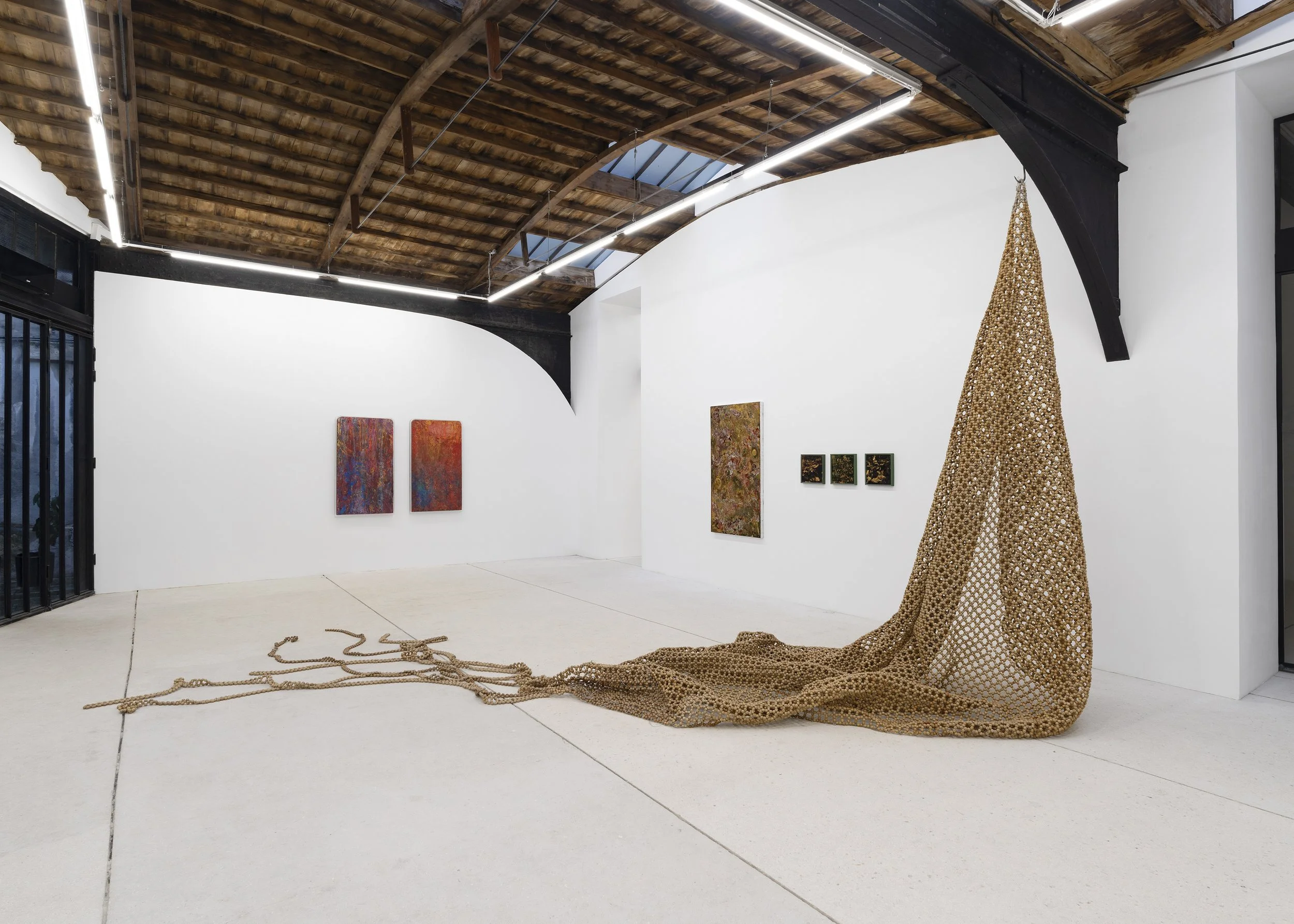
Another Form of Abstraction: Vietnamese Art Flexes Its Freedom.
“RE:FORM - A glimpse of abstraction in Vietnam since Đổi Mới” at galerie frank elbaz in Paris
“Abstraction in the West is different from that in Asia,” curator Lê Thiên-Bảo told me when I remarked that much of the art in “RE:FORM – A glimpse of abstraction in Vietnam since Đổi Mới”, would be counted, according to most definitions, at least in the West, as figurative. “It is much closer to extraction. . . . Painting without form did not exist before Đổi Mới”—the period after 1986 when the country opened to the West through a Socialist-oriented market economy. “Before then, Vietnam was under Russian influence; you were only allowed to make propaganda pictures.” The exhibition traces the practices of five Vietnamese painters and sculptors who since that time have turned to abstraction, which here seems to mean an exploratory, stylistic freedom that could include representation. In the work of several of the artists here, formal experimentation coexists with reflection, through the choice of materials, on the history of their postcolonial, postwar, post-Soviet, neo-consumerist society.
By Joe Fyfe
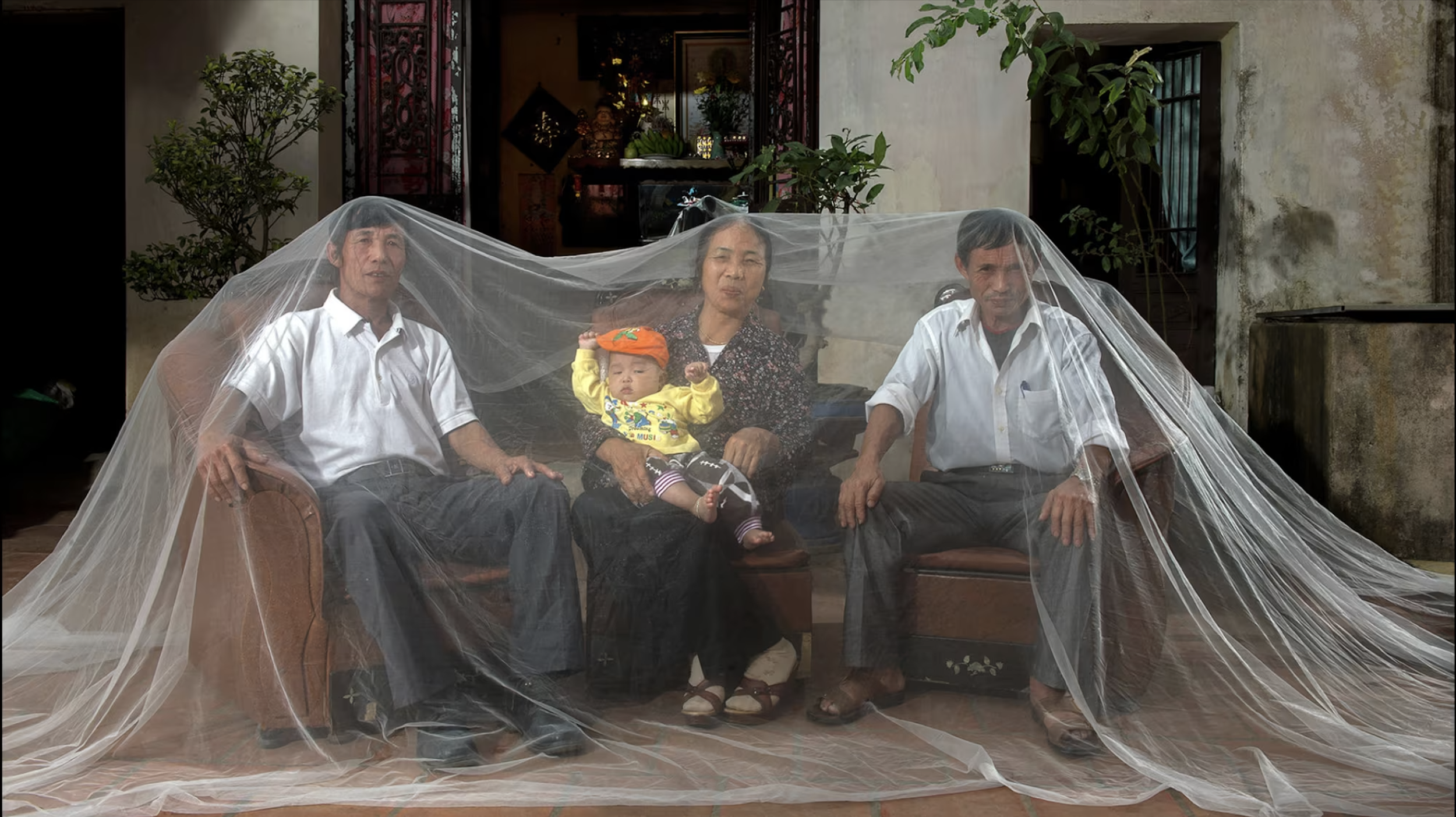
This haunting portrait reveals the suppressed history of marriages long considered taboo.
Beneath a diaphanous white veil, four family members sit together on tan leather chairs, the woman in the center holding a baby in her arms. They gaze pointedly at the viewer, their concealed-yet-visible state a potent metaphor. Now in their 60s, they are the children born from a Japanese soldier and Vietnamese wife in the years that Japan occupied Vietnam during World War II. Like others born from these taboo unions, they have dealt with social hardships and the lifelong absence of their father. Though some troops stayed after the war, many families faced forced separation by the mid-1950s, when soldiers were required to return.
By Jacqui Palumbo (CNN)